Recordings
Selected discography spanning four decades
New Release
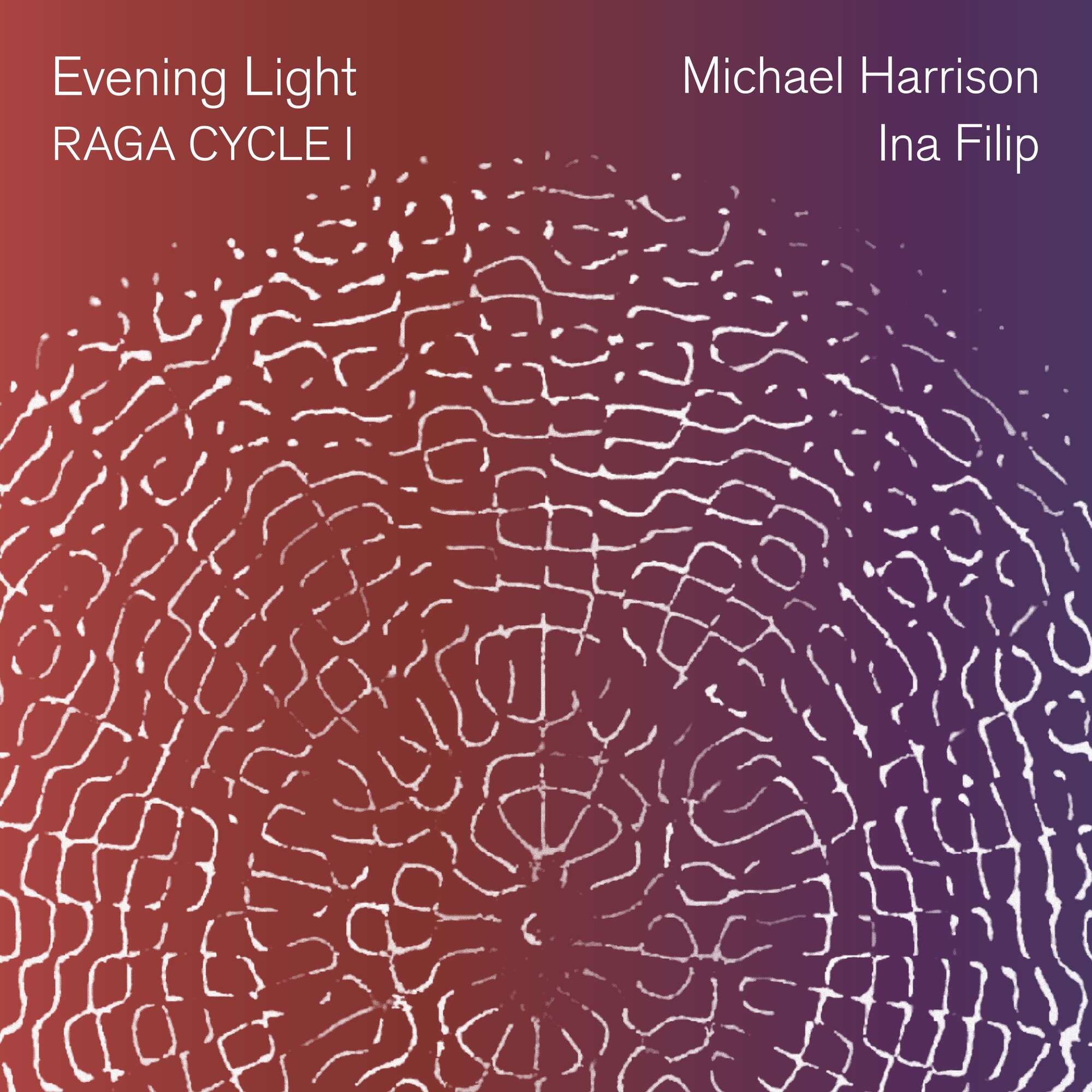
Raga Cycle — Volume 1
Evening Light: Raga Cycle I
Co-composed with Ina Filip, voice; with Elliot Cole, prophet synthesizer; with Benoît Rolland, electroacoustics; Mir Naqibul Islam, tabla
The first volume of Michael Harrison's 8-album Raga Cycle project — music moving through morning, day, evening, and night. Based on Ragas Yaman and Bhupali. Released by Cantaloupe Music.
Discography
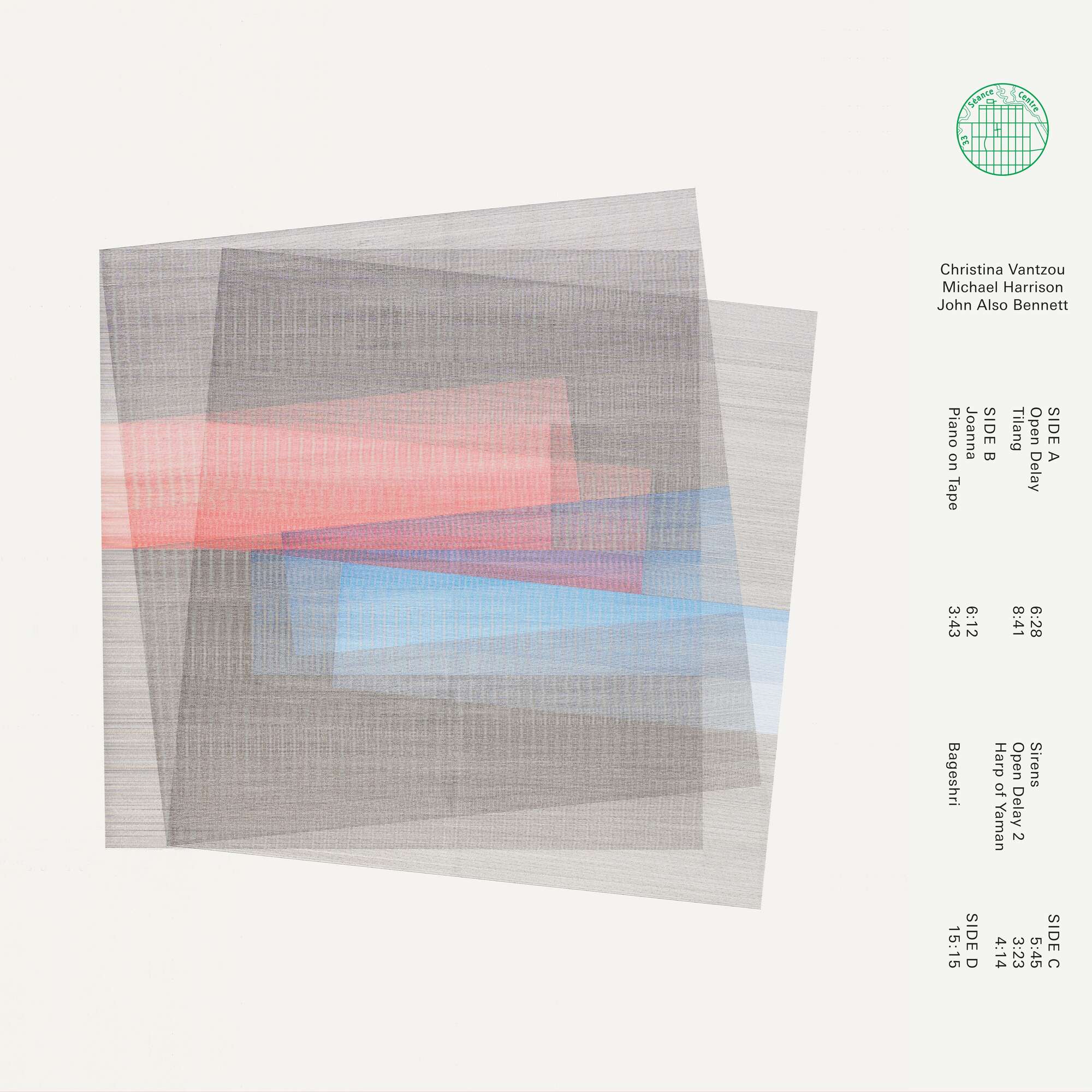
Christina Vantzou, Michael Harrison & John Also Bennett
Christina Vantzou; John Also Bennett
A suite of raga-inspired compositions and improvisations that grew from a fertile collaboration between Christina Vantzou, Michael Harrison and John Also Bennett centered around a devotion to just intonation tuning, deep listening, and resonant spaces. Michael Harrison is a composer and pianist who is a dedicated practitioner of just intonation and North Indian classical music. He was La Monte Young's protégé and piano tuner during The Well-Tuned Piano years and a disciple of Pandit Pran Nath, and has since developed his own customized tuning systems. Guided by conversations with Christina Vantzou, who provided structural frameworks for each piece and directed the sessions, the compositions drew from Harrison's daily raga practice, using its ancient forms as starting points from which the compositions could blossom and morph. A resonant backdrop of modular synthesizers played by John Also Bennett, who also contributed piano improvisations played on Harrison's custom tuned Steinway concert grand, expanded the sessions into true collective praxis. As noted by Parul Gupta, a conceptual artist based in New Delhi who contributed the artwork for the album, "the songs feel like an extension of silence." "An observer, a pianist and a synthesist form a triangle. The observer (Christina) is both witness and guide, the pianist (Michael) is precise and intuitive, and the synthesist (John) provides a palate of drones which offer increased resonance and a supportive framework. The piano has been carefully prepared to become a resonant body. This enhancement was achieved by tuning it to two of Michael's just intonation tunings, based on his work, 'Revelation,' and North Indian classical music, or ragas. These tunings maintain mathematically precise intervals. In place of voice, sitar or tabla, is the piano, and in place of the tanpura, is the synthesizer. Playing ragas is an ancient practice of structured improvisation. Time, knowledge and memory interplay in the body and mind of the practitioner and this is a large part of the raga practice. The raga combines with muscle memory and personal aesthetics to individuate results. Through the formation of a trio, multiple perspectives and timelines collapse and the raga mutates again. These twists and turns seem to only fall back on themselves as the raga shows us that there are multiple compositions already stored in our collective memory. They blossom, morph and spring forth like nature. Nothing was written down to execute these recordings. The simplest forms were explored in the least complicated way. The first reflection of this process is what happens in the mind and body of the listener. The observer is always observing. Regions of sound tap into memory and imagination and the sound of the raga itself becomes a prismatic event." — Christina Vantzou The release collects the trio's 2019 Berlin sessions on two 45rpm records, accompanied by a risograph printed insert featuring track credits and Harrison's handwritten tuning charts used on the album.
Seven Sacred Names
Roomful of Teeth; Tim Fain, violin; Ashley Bathgate, cello; Michael Harrison, piano
Entered the Billboard Classical Chart in the top ten upon release. Called 'music of positively intoxicating beauty' by Steve Smith in The New Yorker. Features performances by Grammy-winning Roomful of Teeth, violinist Tim Fain, cellist Ashley Bathgate, and others, with Harrison on piano.
“…music of positively intoxicating beauty.”
Just Constellations
Roomful of Teeth, vocal octet
Just Constellations was completed in 2016 and recorded in the ultra-reverberant acoustics of the TANK Center for Sonic Arts in Rangely, Colorado in 2017. The work is comprised of four interconnected constellations of justly tuned chords and modes. The first three of these are related to harmonic regions of La Monte Young's epic The Well-Tuned Piano. "The Magic Constellation" presents three variations of "The Theme of The Magic Chord," which is one of the simplest, but most profound themes from The Well-Tuned Piano. "The Acoustic Constellation" is based on the fourth octave of the harmonic series and uses the "acoustic" mode with the 8th, 9th, 10th, 11th, 12th, 13th, 14th and 16th partials (I replace the 13th partial with the 27th partial transposed down an octave). Nom-tom syllables are used throughout the work. Although the sounds of this ancient musical language are derived from mantras, they have no literal meaning. Nom-tom has been used by Indian classical vocalists for centuries to create beautiful vocal timbres and rhythmic accentuations. In "The Magic Constellation," sargam syllables, or the Indian equivalent to solfege, are also used. — Michael Harrison Commissioned by Roomful of Teeth and supported by fellowships from Yaddo and the Virginia Center for the Creative Arts.
Track Listing (4 tracks)
- 01 I. The Opening Constellation: Summer
- 02 II. The Romantic Constellation: Autumn
- 03 III. The Magic Constellation: Winter (based on a theme by La Monte Young)
- 04 IV. The Acoustic Constellation: Spring
“…glacially beautiful… luminous… Harrison's glacially beautiful 2015 piece Just Constellations made the deepest connection to the place [The Tank]: as luminous chords accumulated, it was difficult to tell which pitches were coming from live singers and which were coming out of the walls.”
More Press
“'The Opening Constellation' section proved particularly arresting, a celestial soundscape of gorgeous harmonies that became even more alluringy ambiguous in the ensuing 'Romantic Constellation.' In the concluding 'Acoustic Constellations,' the notes rang out like a jubilantly microtonal choir of bells.”
“Michael Harrison's Just Constellations explored the opposite of reckless heterogeneity. Influenced by seminal minimalist La Monte Young, the music isn't repetitive so much as it settles onto a single chord and evolves so subtly it's like watching a landscape in changing light.”
For This From That Will Be Filled
Clarice Jensen
The debut album by Clarice Jensen, artistic director of the American Contemporary Music Ensemble (ACME). The album explores the variable differences between acoustic and electronic sound as well as depiction of the simulated and the unconscious. It was originally conceived as a collaboration between Jensen and the artist Jonathan Turner as an audio-visual work, but is here presented in its pure audible form. Building on a long and romantic tradition of solo cello repertoire, Jensen expands and confuses the familiar sound of the cello through the use of effects pedals, multi-tracking, and tape loops recorded at variable speeds, presented in works she has written for herself as well as a piece she conceived together with Icelandic composer Jóhann Jóhannsson. Also featured is Michael Harrison's Cello Constellations for multi-tracked cello and sine tones, written for Jensen, which meditates on long, sustaining tones.
Harmonic Constellations
Mari Kimura, violin
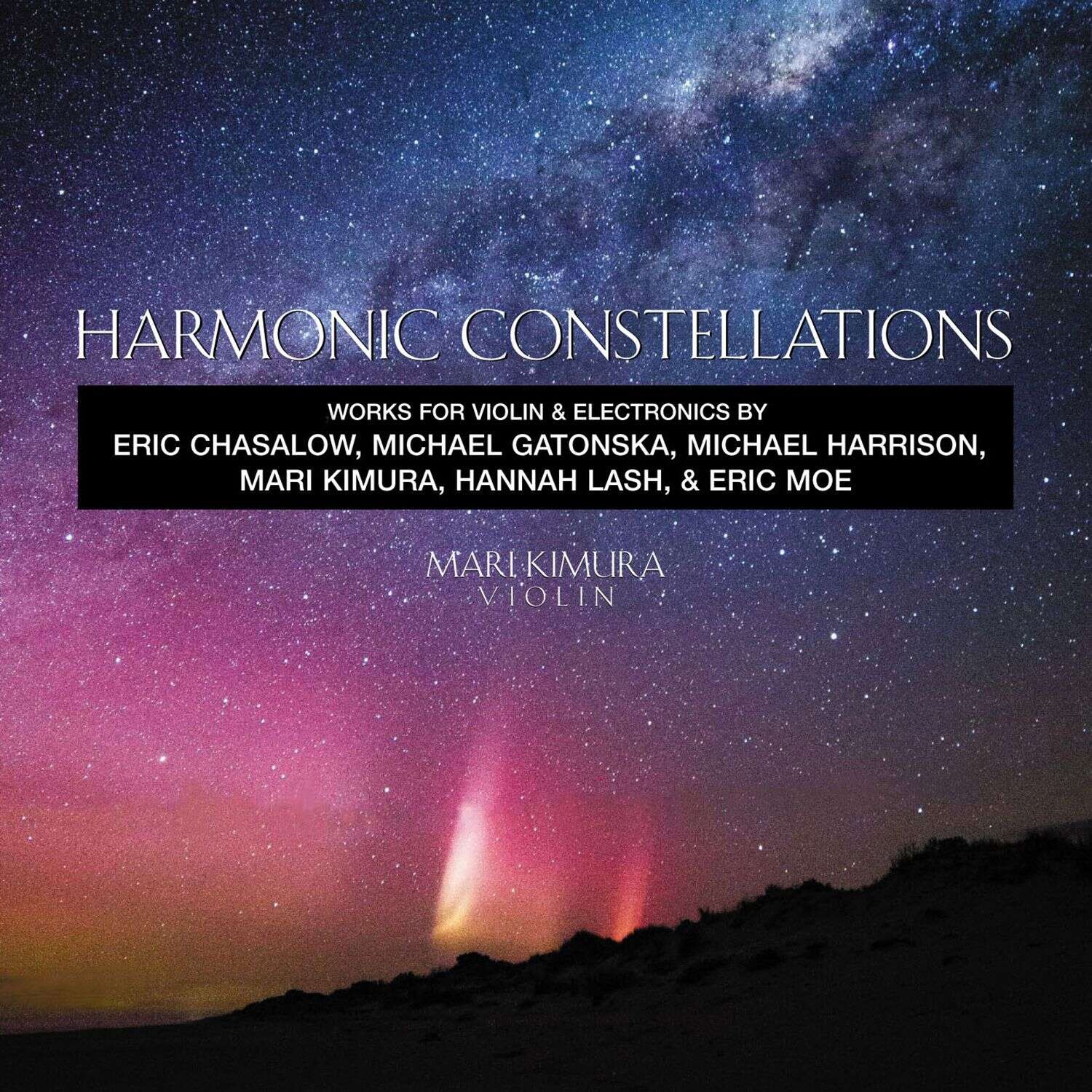
For Harmonic Constellations, violinist Mari Kimura has collected half a dozen works for violin and electronics, by a group of American composers each of whom has a distinctive compositional style, and who take different approaches to the challenge of composing for the violin and electronics. Of particular note is the premiere recording of the title track, a major new composition from Michael Harrison, which is scored for violin with 13 pre-recorded tracks and computer generated sine tones. The work is composed of nine constellations of complex just intonation harmonies that gradually shift and evolve over time.
“…lovely and hypnotic. Michael Harrison's Harmonic Constellations (2016) is the title track of the disc and the longest work on the program. It pairs the live violin with a prerecorded part of both violin tracks and sine-tones… The result, over its 20-plus minutes, is lovely and hypnotic.”
More Press
“…Long, sustained pitches—combined with minimal vibrato and keenly accurate intonation—produced a pleasing minimalist drone, for an otherworldly excursion into the farthest reaches of the string universe.”
“As Michael Harrison has pressed further into the map of his musical life, something magical has happened. The map is folding in on itself, with the seemingly distant now adjacent regions overlapping, simple lines becoming multi-dimensional.”
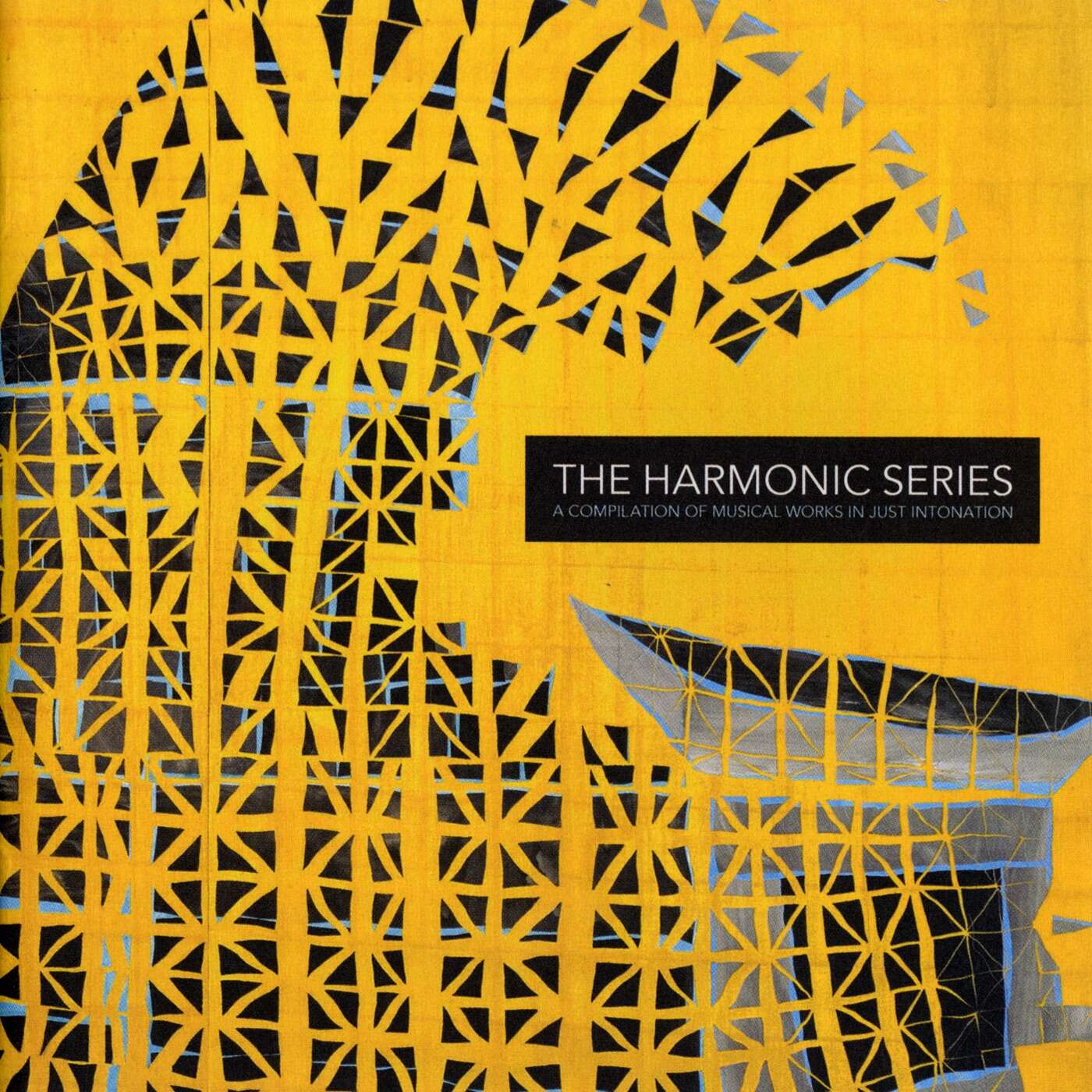
The Harmonic Series is a compilation of musical works in just intonation created by three generations of contemporary composers who utilize this fascinating tuning system. A dense info booklet is included with notes from each artist. This compilation was curated over the span of two years by Duane Pitre. The goal of this compilation and its accompanying liner notes is to educate listeners about the origins and use of just intonation, as well as to portray the unique beauty of this tonal "color palette," which is heard by relatively few in the Western world and explored by even fewer. Although all the artists on the compilation work within the avant-garde/experimental genre, each artist lends something unique to the collection, and each employs a different approach toward how to utilize just intonation. Within The Harmonic Series you'll find an array of instrumentation such as piano, cello, accordion, electronics, guitar, Ukelin, saxophone, violin, koto, and more. The featured artists are: Pauline Oliveros, Ellen Fullman, Charles Curtis, Michael Harrison, Greg Davis, R Keenan Lawler, Duane Pitre, Theresa Wong, and Zachary James Watkins.
Just Ancient Loops
Maya Beiser, cello; Bill Morrison, film
A multimedia work for solo cello and 19 pre-recorded cellos, with film by Bill Morrison employing high-resolution scans of ancient nitrate footage and newly created CGI renderings depicting different views of Heaven. Commissioned by The MELA Foundation (2012). NPR Top 10 Classical Albums of 2012. Over 40 live performances and international film festivals have included Eye Filmmuseum, MIT's Center for Arts, Science and Technology, The Louvre, BAM Next Wave Festival, Ojai Music Festival, MoMA, Stuttgart Ballet, Strings of Autumn, Sundance, AFI Fest, and Bang on a Can.
Track Listing (3 tracks)
- 01 Just Ancient Loops I. Genesis 10:08
- 02 Just Ancient Loops II. Chorale 5:37
- 03 Just Ancient Loops III. Ascension 8:38
“Just Ancient Loops, with its evocative drone and pizzicato opening, unfolds like a journey. The music, with its blend of East and West, soars in interlocking swirls of color, rests in a central chorale and builds steam to an ecstatic conclusion, sounding as if it has always been here.”
More Press
“…an exalting, almost breathless new plane… Michael Harrison's Just Ancient Loops lifted the evening to an exalting, almost breathless new plane. The 25-minute work (built on just intonation, ancient modes and electronic loops) opens innocuously, with buoyant riffs over a quiet drone, and you think you're in for a travelogue. But its power builds with unstoppable force, deepening and expanding with irresistible energy, and by the climax Beiser was filling the hall with a vast ecstatic ocean of sound.”
“If there really is a music of the spheres, the sound of a fundamental harmony in the universe, it has to be Just Ancient Loops… propels viewers through time and space, landing them in the present, elated…”
“The Bang on a Can Marathon is always good for a spectacle or two. The day's glitziest work was Michael Harrison's Just Ancient Loops, which cellist Maya Beiser performed along with some 20 electronic versions of herself and accompanying video work by Bill Morrison…”
“Michael Harrison's Just Ancient Loops, an appealing mix of live and recorded cello lines, raga-inspired drones and Minimalist rhythms performed by Maya Beiser, was enhanced by Bill Morrison's film, recorded on archival and decaying celluloid, and repurposed for Georges Méliès-style fantasy and sublimity.”
“The word 'maverick' is overused in the contemporary music world. But in the case of composer Michael Harrison and cellist Maya Beiser, the descriptor is deserved.”
“…a wonderful soundscape… absolutely stunning. Harrison uses raga-inspired drones, minimalist rhythms and textures, and beautiful melodies to encompass us in a wonderful soundscape all inspired by ancient modes. The purity and beauty that is obtained from the cello in this piece is… absolutely stunning.”
“…the evening's longest and most appealing piece: Michael Harrison and Bill Morrison's Just Ancient Loops. Also touched by raga-style drones, modal and minimalist influences, Harrison's three-part suite gloriously demonstrated the alluring power of those mathematically and musically beautiful intervals. It was probably the most purely beautiful performance I've ever experienced at TBA.”
Time Loops
Maya Beiser, cello; Young People's Chorus of New York City; Francisco J. Núñez, conductor; Payton MacDonald, tabla & percussion
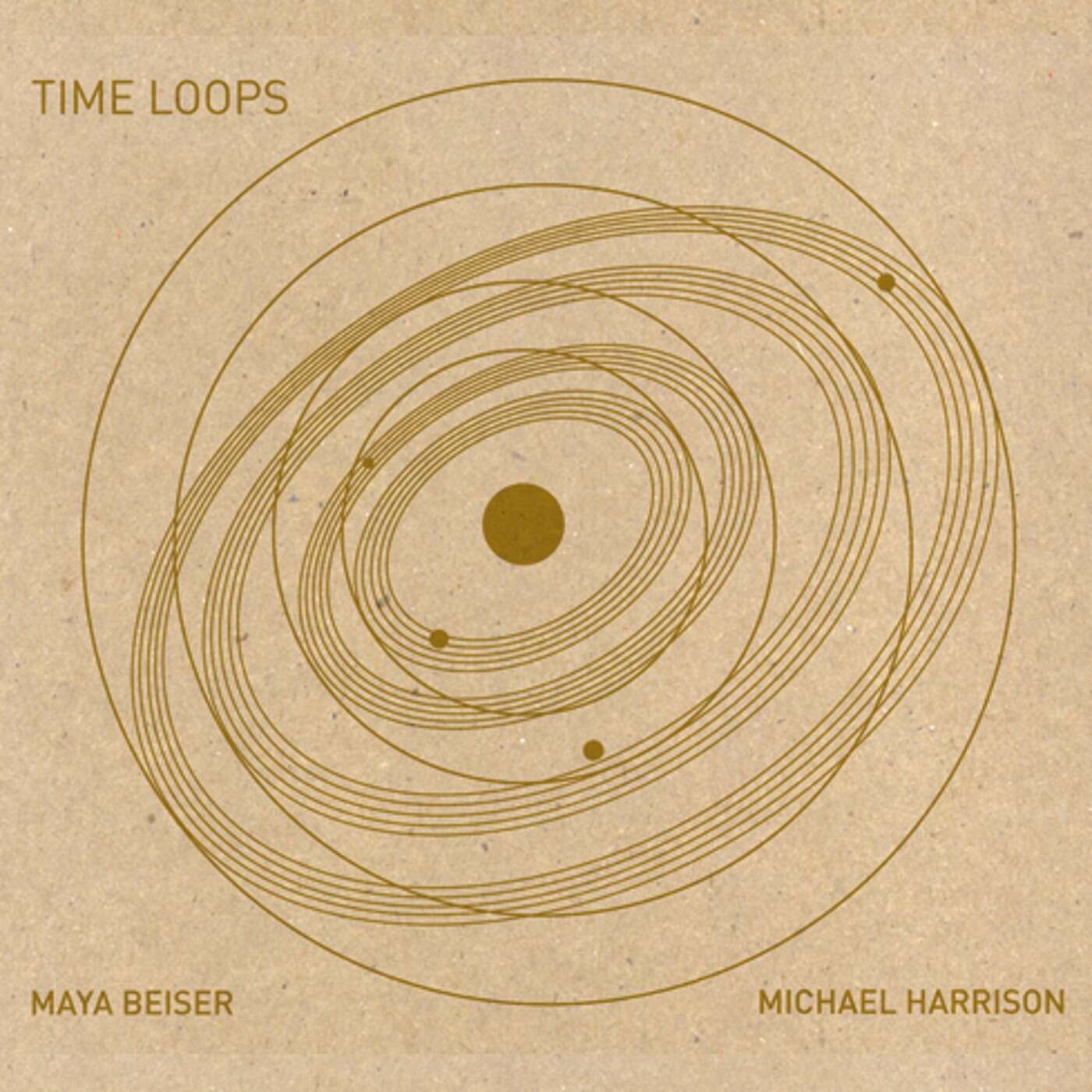
A collaboration with cellist Maya Beiser and the Young People's Chorus of New York City, with Francisco J. Nunez, conductor, and Payton MacDonald, tabla and percussion. Includes Harrison's Just Ancient Loops, Hijaz, and Raga Prelude I, as well as works by J.S. Bach and Arvo Part. NPR Top 10 Classical Albums of 2012.
Track Listing (8 tracks)
- 01 Just Ancient Loops I. Genesis 10:08
- 02 Just Ancient Loops II. Chorale 5:37
- 03 Just Ancient Loops III. Ascension 8:38
- 04 Time Loops 2:42
- 05 Ave Maria 3:05
- 06 Spiegel Im Spiegel 9:41
- 07 Raga Prelude I (Yaman) 8:01
- 08 Hijaz 12:32
“Just Ancient Loops, with its evocative drone and pizzicato opening, unfolds like a journey. The music, with its blend of East and West, soars in interlocking swirls of color, rests in a central chorale and builds steam to an ecstatic conclusion, sounding as if it has always been here.”
More Press
“…an exalting, almost breathless new plane… Michael Harrison's Just Ancient Loops lifted the evening to an exalting, almost breathless new plane. The 25-minute work (built on just intonation, ancient modes and electronic loops) opens innocuously, with buoyant riffs over a quiet drone, and you think you're in for a travelogue. But its power builds with unstoppable force, deepening and expanding with irresistible energy, and by the climax Beiser was filling the hall with a vast ecstatic ocean of sound.”
“If there really is a music of the spheres, the sound of a fundamental harmony in the universe, it has to be Just Ancient Loops… propels viewers through time and space, landing them in the present, elated…”
“The Bang on a Can Marathon is always good for a spectacle or two. The day's glitziest work was Michael Harrison's Just Ancient Loops, which cellist Maya Beiser performed along with some 20 electronic versions of herself and accompanying video work by Bill Morrison…”
“Michael Harrison's Just Ancient Loops, an appealing mix of live and recorded cello lines, raga-inspired drones and Minimalist rhythms performed by Maya Beiser, was enhanced by Bill Morrison's film, recorded on archival and decaying celluloid, and repurposed for Georges Méliès-style fantasy and sublimity.”
“The word 'maverick' is overused in the contemporary music world. But in the case of composer Michael Harrison and cellist Maya Beiser, the descriptor is deserved.”
“…a wonderful soundscape… absolutely stunning. Harrison uses raga-inspired drones, minimalist rhythms and textures, and beautiful melodies to encompass us in a wonderful soundscape all inspired by ancient modes. The purity and beauty that is obtained from the cello in this piece is… absolutely stunning.”
“…the evening's longest and most appealing piece: Michael Harrison and Bill Morrison's Just Ancient Loops. Also touched by raga-style drones, modal and minimalist influences, Harrison's three-part suite gloriously demonstrated the alluring power of those mathematically and musically beautiful intervals. It was probably the most purely beautiful performance I've ever experienced at TBA.”
Revelation has twelve interconnected sections in various key centers. Originally, the main thematic material for most sections of the work was composed but the resonant tone clouds incorporated structured improvisation using a set of pre-determined pitch relationships, rhythmic patterns and ostinati to develop a complex sustained harmonic resonance with unusual acoustical effects. In order to optimize these effects Harrison wanted to be flexible enough to vary what he was playing in response to what he was hearing. The exact nature of these effects would vary according to resonances of the instrument, the precision of the tuning, the acoustics of the performance space, and even variations in temperature and humidity. However, while working on a score that would enable pianists other than himself to play the work, he eventually decided to notate the tone clouds, with their complex, shifting rhythmic patterns. As he scored the work, he found that he could more fully develop the themes and material by writing everything out rather than leaving the development to the discretion of the performer. Named Best Classical Recording of 2007 by The New York Times, The Boston Globe, and Time Out New York.
Track Listing (12 tracks)
- 01 Revealing the Tones 4:26
- 02 Night Vigil 2:38
- 03 Revealing the Commas 5:29
- 04 Tone Cloud I 8:14
- 05 Homage to La Monte 5:38
- 06 Tone Cloud II 8:47
- 07 Night Vigil II 3:07
- 08 Vision in the Desert 3:22
- 09 Carillon 6:38
- 10 Tone Cloud III 5:13
- 11 Finale 5:25
- 12 Tone Cloud IV 12:56
“…a virtuosic tour-de-force… Michael Harrison's Revelation: Music in Pure Intonation is probably the most brilliant and original extended composition for solo piano since the early works of Frederic Rzewski three decades ago (and no, I am not forgetting Elliott Carter). What could have been a mere glossary of unfamiliar sonorities made possible by Harrison's unconventional tuning of a grand piano turned instead into a virtuosic tour-de-force that would have done credit to the hypothetical team of Franz Liszt and Claude Debussy working overtime. ”
More Press
“…one long intoxication… As soon as the first notes sound, you know: the piano sounds very different from what we are used to. In a certain way more natural, more organic, whereby the sound resembles bells and clocks… The one and a half hour that the piece finally takes is therefore one long intoxication. ”
“Mr. Harrison strips away centuries of well-tempered convention to reveal naked notes, which he stacks up in clear chords or swirling clouds.”
“This hour-plus trance-inducing solo piano work is a vast experiment in 'pure intonation.' Using an original tuning for the piano, Harrison makes it hum and vibrate in ways that sound both ancient and modern.”
“Michael Harrison, Revelation: Pianist-composer Harrison documented his just-intonation solo manifesto, and the results were completely absorbing.”
“Revelation is a caressing, cataclysmic, monumentally over-the-top ode… a sonic bomb… you might think all the bells of the Vatican have entered your skull… by the hallucinatory end, it's all stars and rainbows.”
“Revelation is more than simply a composition. It's an entire sound world, created by selecting certain pure acoustic intervals and arranging them on the piano keyboard.”
“…a new harmonic world began to assert itself.”
“Think of Wagner's Tristan chord, Debussy's Prelude to the Afternoon of a Faun, Schoenberg's Op. 23 Piano Pieces, or Cage's Sonatas and Interludes for Prepared Piano. Each created new possibilities for their day… The same can be said of Michael Harrison's music. The results are often wondrous. In the midst of clouds of dense clusters rapidly drummed in the bass end of the instrument, an astute listener can perceive high ghost tones — sometimes bell-like, at other times vaporous — as if a choir of angels were singing along. ”
“Composer Michael Harrison has gone further than other musicians would dare, creating a customized piano to perform in his self-invented, idiosyncratic method of tuning. The outcome is a lofty work 'both archaic and avant-garde.' As the pieces 'build, refract, and climb,' you are pulled into Harrison's 'beauty/madness.'… Harrison is 'like a magician setting up a trick.' He transforms overtones, welcomes their clashes, and keeps his audience surprised and thoroughly captivated, taking them on a tour of beautiful and exotic 'non-Euclidean musical worlds.' ”
“With the tones stirred on the scale, totally different colors glowed red-hot…the crashing of a gong, bells, the plucking of a harp or sitar, the sound of a horn—the resonance nearly reaches one's abdomen.”
“A monumental work… the pulsing, gamelan-like waves Harrison conjures from his customized 'harmonic piano' have a hypnotic effect… Revelation sounds like a lullaby that would put only a mad scientist to sleep.”
“A pulsating, shimmering wall of sound in which all kinds of ghost-like sound effects and structures appear. A formidable pianist, Harrison… has a fascination with reconciling form and improvisation through raga-like structures, which beckon towards an unexplored universe of sound relationships.”
“Revelation should prove to be one of the most influential piano compositions of the 21st century.”
“…phantom overtones and resonances seemed to hover around him.”
“An indisputable landmark in Western tuning's circuitous history.”
“What is the next big thing? Michael Harrison's 90-minute Revelation is that sort of revolutionary work…”
“…you play the vividly specific, spine-chilling intervals on [Harrison's] 'just' piano, and then everything sounds so bland and washed-out and arbitrary and disappointing on the conventionally tuned one.”
“Glorious clouds of harmonics, …divine thunder, angel choirs, celestial bells.”
“Revelation is a 90-minute marathon for solo piano employing an otherworldly vocabulary of sounds and effects.”
“The intelligent discrimination with which he approaches his work is something that I have heard only in a tiny handful of classical recordings starting with Glenn Gould.”
“Revelation is one of the first great musical pieces of the 21st century.”
“Revelation belongs among the exhaustive modern masterpieces for solo piano, resting securely at the same level as Hindemith's Ludus Tonalis, Shostakovich's Preludes and Fugues, Cage's Sonatas & Interludes, Duckworth's Time Curve Preludes, and La Monte Young's The Well-Tuned Piano.”
“Often it sounds as if there is a whole orchestra of acoustic and electronic instruments accompanying the piano. Literal waves of sound wash over the audience…and after sitting through 90 minutes of this tuning, regular pianos seem colorless.”
“Revelation is a visionary development in the history of temperament.”

RUMI: Lovedrunk
Shahram Shiva; Olivier Glissant
Rumi: Lovedrunk (Remastered) is a groundbreaking audio project that features several talented musicians from Persia, Europe, Latin America and the U.S., and includes original compositions by Olivier Glissant and Michael Harrison. This album blends the exotic and the meditative with hip grooves and inventive arrangements and the deep, resonant and hypnotic voice of Shahram Shiva. Rumi is the greatest exponent of the ecstatic intoxication of mystic love. Shahram Shiva, award-winning Rumi translator, performer and author, captures the essence of the poet's message through his passionate performances. This union of spoken verse and world music melds magic with love. This meticulously composed and produced CD is much more than a "Spoken Word" project and can be listened to both for the beauty and power of Rumi's words, as well as for the captivating and inspiring mood of the music and poetic images.

Compilation appearance preserving Michael Harrison's work within the Windham Hill piano catalog.
"From Ancient Worlds" is an allegory for a journey of the soul. "Song of the Rose," representing the soul, is the central theme of the work, and is presented in the style of a chorale (although it also appears in numerous variations, such as "Quest for the Rose", "Epiphany" and "Rose of Remembrance"). Various motifs, cadences and harmonic relationships from "Song of the Rose" are echoed in other parts of the work as well, depicting the soul's return in different guises as it travels through the imaginary landscapes of the various sections. At the end of its journey, "Song of the Rose" returns in the elegiac "Rose of Remembrance", where phrases are juxtaposed with flashbacks of the major themes of the work. This is a metaphor for what is believed to be one of the first experiences of the afterlife: seeing life pass before your eyes in the presence of a Being of Light. "Rose of Remembrance" reaches for a glimpse behind the veil of our reality as it explores the experience of passage into the other world. What once existed is never completely finished, and as the soul lives on, so the final note of "From Ancient Worlds" is left unresolved. Voted the No. 2 Best Recording of the Year on WNYC-FM's New Sounds Listener's Poll.
“…the kind of finely shaded spectrum we might achieve in the third millennium.”
More Press
“The best of both worlds: the delectable just-tuned piano sound with the ability of harmonic motion found in traditional classical works.”
“The tuning system and modified strings transform the piano's sound, creating a strangely 'Eastern' timbre, with sustained overtones.”
“If the walls of an ancient European cathedral of Middle Eastern monastery could sing, this is what you'd hear.”
“Harrison gives the piano a versatility of sound never heard before, ranging from harp to guitar to sitar.”
“Harrison has perfected a way of playing in just intonation at the piano… such celestial resonance that it captures your attention from the first note.”
In Flight is a collection of original piano solos in both just intonation and standard piano tuning. In the artistic hands of pianist and composer Michael Harrison, contemporary acoustic piano finds a new elegance and clarity of lyric expression. Blending classical, impressionistic, and jazz influences, his melodies and rhythms can be energetically in flight or as intimate as a breath of air against distant wind chimes. They remain most memorable for their subtle power and emotional grace. The title track was used by Columbia Pictures in the movie trailers and television advertisements for the Academy Award winning movie Awakenings. Harrison is one of the new wave of composers working with just intonation, an ancient tuning system which is based on natural acoustic intervals. Both Because of You and The Swan Has Flown to the Mountain Lake are presented in this special tuning. Characterized by poignant melodies, rich harmonies, and layers of rhythmic patterns, his sounds are technically adept and deeply emotional.
Track Listing (8 tracks)
- 01 In Flight 5:56
- 02 The Swan Has Flown to the Mountain Lake 7:04
- 03 Because of You 4:02
- 04 Echo of Time 3:47
- 05 The Joy of Life 3:32
- 06 Ocean Dance 4:33
- 07 Winter's Dream 5:44
- 08 Mira 5:44